

Heyball Pocket Size: Why 85 mm Corners Matter
Heyball rewards accuracy in a way few other cue sports can. It combines full-size 57.2 mm pool balls with a table that has rounded, snooker-style pocket jaws. That combination makes pocket geometry – not just table length or cloth speed – one of the most important factors in how a Heyball table plays.
So, what is the right Heyball pocket size for serious training?
For BOJUE’s tournament-focused configuration, the pocket mouths are:
- Corner pockets: 85 mm (8.5 cm / approximately 3.35 in)
- Side pockets: 82 mm (8.2 cm / approximately 3.23 in)
These dimensions are designed to reproduce the tight, precision-first playing conditions associated with JOY-style professional Heyball competition tables. By comparison, many Heyball tables sold in the wider market use corner pockets of 88 mm or even 90 mm, with side pockets around 85 mm.
A difference of only 3-5 mm may sound small. On the table, it is anything but small.
Quick Comparison: Tournament-Focused vs. Wider Heyball Pockets
| Pocket position | BOJUE tournament-focused setup | Common market setup | Difference |
| Corner pocket | 85 mm | 88-90 mm | 3-5 mm tighter |
| Side pocket | 82 mm | About 85 mm | About 3 mm tighter |
Pocket measurements should always be compared using the same method and reference points. Pocket opening alone also does not tell the whole story: jaw radius, facing profile, shelf, cushion height, cloth and installation accuracy all affect whether a shot is accepted.
Why Does a 3-5 mm Difference Matter?
A standard Heyball ball is about 57.2 mm in diameter. With an 85 mm corner opening, the margin between the ball and the two pocket jaws is limited. The player must deliver the object ball on a more accurate line and at an appropriate speed.
Move to an 88 mm or 90 mm corner pocket and the table becomes more forgiving. A slightly inaccurate cut or a ball that brushes a jaw may still drop. That can make casual play more accessible, but it can also hide errors during serious practice.
Tighter pockets provide clearer feedback:
- Poor alignment is exposed immediately.
- Excessive speed is punished more often.
- Pocket-center aiming becomes a habit.
- Cue-ball position must be planned more precisely.
- Bank shots and rail shots demand better speed control.
This is why a few millimeters can separate recreational conditions from useful tournament preparation.
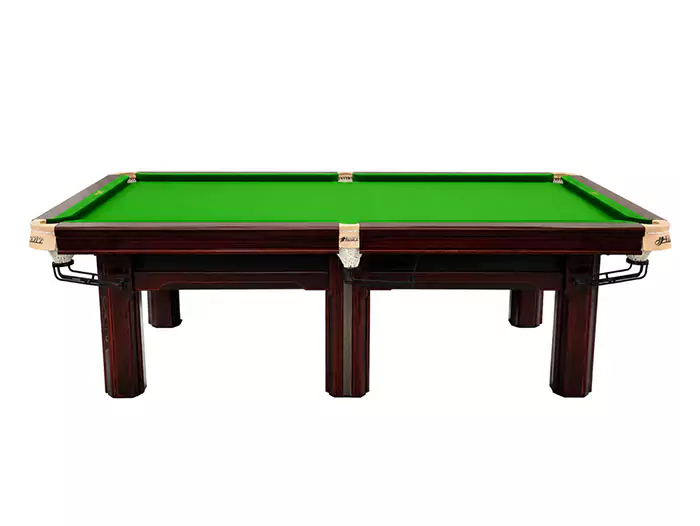
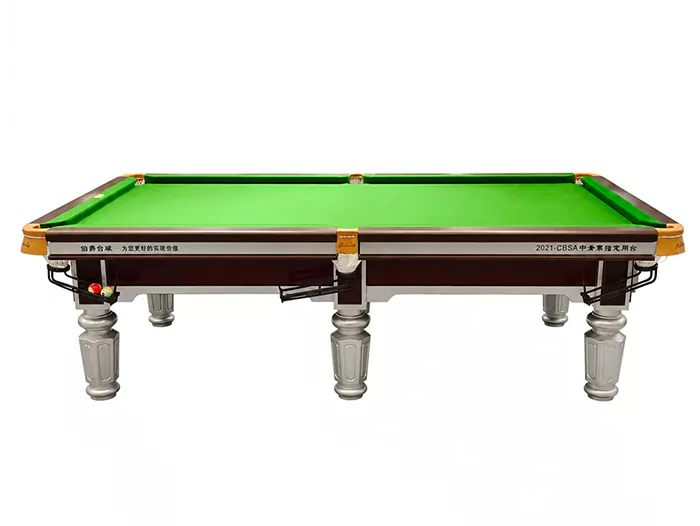

Training for JOY Heyball Events Starts with Comparable Conditions
JOY tables are widely used across major international Heyball events. WPA event materials have listed JOY Heyball tables as official tournament equipment, while recent championships have brought together players from dozens of nations.
If you plan to enter a tournament played on JOY equipment, practicing only on large-pocket tables can create a false sense of confidence. Shots that fall on a 90 mm pocket may stay on the table when the opening is reduced to 85 mm. The difference becomes especially clear on:
- Long straight pots
- Thin cuts
- Shots played firmly along a cushion
- Side-pocket shots from a sharp angle
- Positional shots that require pocket cheating
BOJUE’s 85 mm corner and 82 mm side configuration is engineered to give players demanding, JOY-style training conditions. It does not make a BOJUE table an officially branded JOY tournament table, and tournament organizers may specify particular equipment. It does mean that players can develop accuracy and speed control under closely comparable pocket dimensions before arriving at an event.
Train on tighter, competition-oriented pockets and the transition to a JOY event table becomes much more natural.
Pocket Size Is Only Part of Pocket Difficulty
Two tables can both advertise an 85 mm corner pocket and still play differently. The number describes the mouth width, but a complete pocket system includes several interacting elements.
1. Rounded pocket-jaw geometry
Heyball uses rounded, snooker-influenced pocket jaws rather than the wide, angular mouths found on many American pool tables. The curve determines how a ball reacts after contacting the jaw. A poorly shaped jaw can reject a good rail shot or accept an inaccurate one unpredictably.
2. Pocket-facing finish
The rubber at the pocket opening must be shaped and finished consistently. Small variations at the jaw can change the effective target from one pocket to another.
3. Pocket shelf and drop
The distance between the pocket mouth and the point at which the ball falls also affects difficulty. A deeper shelf can make a pocket play tighter even when the mouth measurement is unchanged.
4. Cushion nose height
Correct cushion height is essential for predictable rebound. The ball must contact the active part of the rubber at the intended height. If the nose is too high or too low, rebound angle, speed and spin response can become inconsistent.
That is why buying a Heyball table by a single pocket-size number is risky. Serious buyers should evaluate the entire cushion-and-pocket system.
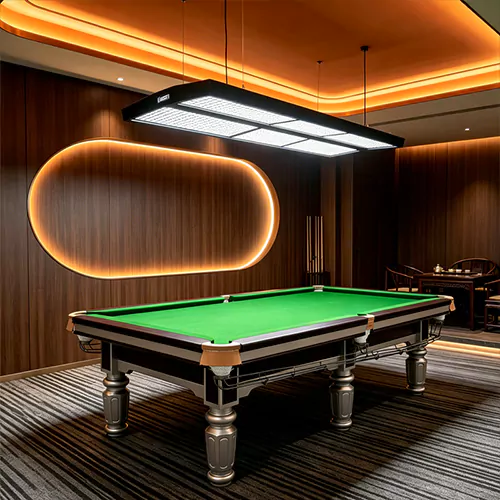
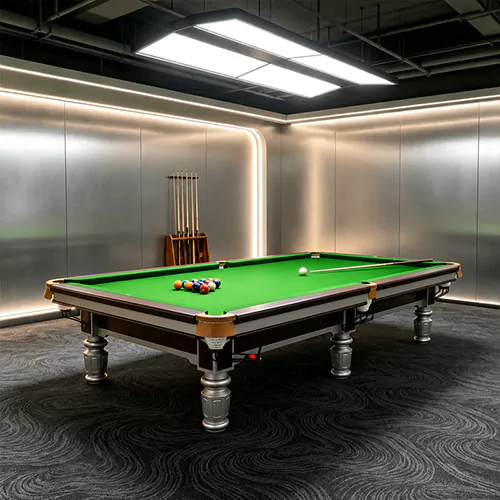
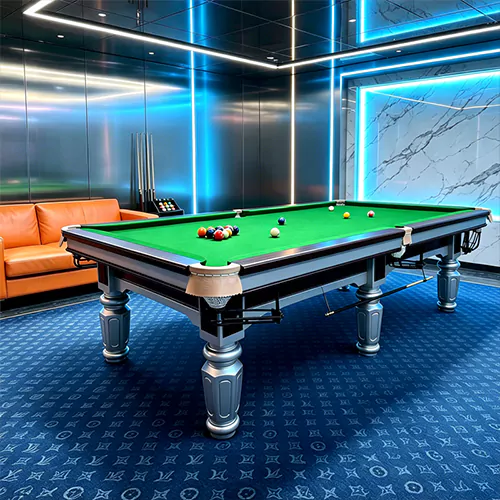
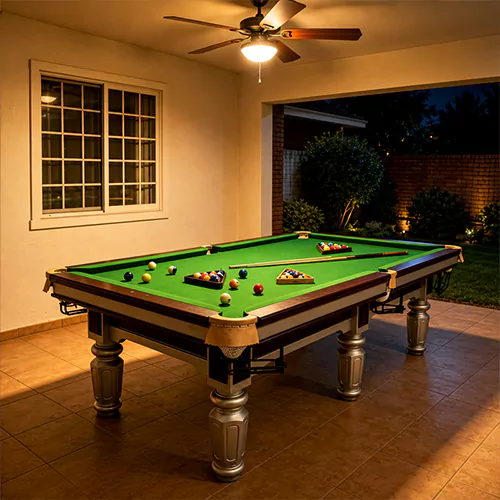
Calibrated Cushion Height for Full Rubber Response
On a professional table, the cushion should not merely stop the ball – it should return energy in a controlled and repeatable way.
BOJUE calibrates the cushion nose height so both the cue ball and object balls contact the rubber correctly. This helps the ball engage the cushion’s elastic zone instead of striking too high or too low. The result is a cleaner, more complete rebound response.
For players, this matters in several areas:
- One-, two- and three-rail cue-ball routes become easier to predict.
- Bank-shot angles remain more consistent.
- Side spin produces a more readable reaction.
- Speed control improves because the cushion returns energy more evenly.
- Safety play along the rails becomes more dependable.
Reliable cushions allow a player to learn from every shot. When the response is consistent, a miss can be traced back to aim, speed or spin instead of unpredictable table behavior.
Specially Finished Pocket Cushions for Confident Rail Shots
Rail shots are among the best tests of a Heyball table. The object ball travels close to the cushion and enters the pocket near a rounded jaw, leaving almost no room for inaccurate pocket geometry.
BOJUE gives special attention to the rubber and facing around each pocket opening. The pocket-jaw area is carefully shaped and finished to produce a smooth, consistent transition from cushion to pocket.
This construction is intended to make a correctly played rail shot feel demanding but fair. The pocket does not simply become easier; instead, a ball delivered on the right line and at the right pace can use the designed jaw profile cleanly. Players gain confidence attacking balls near the cushion while still receiving honest feedback on inaccurate shots.
The benefit is especially noticeable when practicing:
- Corner-pocket rail cuts
- Slow shots that must hold the cushion line
- Firm rail shots under pressure
- Banks that arrive close to the pocket jaw
- Cue-ball routes that pass through the pocket zone
Why Wider Pockets Can Limit Tournament Preparation
An 88 mm or 90 mm corner pocket has a place in the market. It can suit new players, social clubs and venues that prioritize faster games. But it may not be the best choice for competitors.
Repeated practice on forgiving pockets can reinforce small technical errors. A player may aim at the open half of a pocket, overhit shots or rely on the jaw to accept a ball. These habits become expensive when the same player reaches a tight tournament table.
An 85/82 mm setup asks for better habits from the beginning:
- Choose a precise entry line.
- Deliver the cue straight.
- Control object-ball speed.
- Plan cue-ball position without depending on excessive pocket cheating.
- Treat side-pocket shots with the respect their tighter opening requires.
The table becomes part of the coach: every accepted ball confirms the correct line, while every rejection gives useful information.
Heyball Is Becoming a Global Cue-Sports Discipline
Heyball is no longer confined to the Chinese domestic market. The international tournament structure now includes world, continental, junior, women’s and parasport competition.
The 2025 WPA Heyball World Championship in Brisbane featured 128 players – 64 men and 64 women – and a total prize fund of USD 400,000. WPA coverage reported athletes from more than 35 nations. In 2026, the Junior and Parasport World Championships in Oslo brought together 122 athletes from 42 countries. The 2026 European Heyball Championships and European Open in Poland drew nearly 150 athletes from five continents.
JOY has played a major role in that expansion as an equipment partner across prominent WPA and World Heyball Tour events. The 2026 JOY Cup World Heyball Masters Grand Finals in Qinhuangdao advertised a total prize pool of CNY 11.584 million, approximately USD 1.68 million at the organizer’s stated conversion.
These events show the direction of travel: more countries, more player categories, more ranking opportunities and higher-profile international competition. For clubs, academies and distributors, a tournament-focused Heyball table is therefore not only a product for today’s players – it is an investment in a growing discipline.
Who Should Choose an 85/82 mm Heyball Table?
The tighter configuration is particularly suitable for:
- Professional players and ambitious amateurs
- Players preparing for JOY-table tournaments
- National teams and training academies
- Competitive billiard clubs
- Coaches who need honest technical feedback
- Venue operators building a serious Heyball community
- Distributors serving the professional and premium market
For a family room or beginner-only venue, a wider pocket may offer a gentler learning curve. For competition training, however, pocket dimensions should match the challenge the player expects to face.
What to Ask Before Buying a Heyball Table
Before comparing quotations, ask the manufacturer for more than a headline pocket measurement:
- What are the corner and side pocket mouth dimensions?
- Where exactly is each measurement taken?
- What tolerance is maintained across all six pockets?
- How are the pocket jaws shaped and finished?
- Is cushion nose height calibrated for 57.2 mm balls?
- What cushion rubber, cloth and slate are used?
- Is the setup intended for recreation or tournament training?
- Can the manufacturer provide installation guidance and after-sales support?
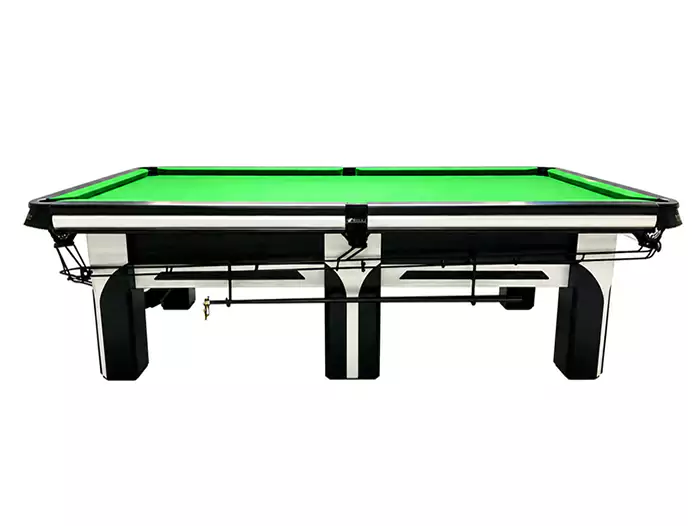
BOJUE manufactures a full range of cue-sports tables and offers Heyball solutions for professional training, billiard clubs, distributors and OEM customers. Its tournament-focused 85 mm corner and 82 mm side pocket setup is built for buyers who value demanding, transferable playing conditions.
Final Verdict: The Best Heyball Pocket Size Depends on Your Goal
There is no single pocket size for every player. Wider 88-90 mm corner pockets can make recreational games easier and faster. But if your goal is serious Heyball training, an 85 mm corner and 82 mm side configuration provides a more demanding and competition-relevant test.
BOJUE combines those tight dimensions with calibrated cushion height and specially finished pocket-jaw rubber. The result is a table designed to reward accurate potting, predictable rebounds and confidently played rail shots.
If you want to prepare for major Heyball events played on JOY tables, practice conditions matter. Training on BOJUE’s tournament-focused setup can help you arrive familiar with tight pockets, disciplined speed control and the precision modern Heyball demands.
Explore BOJUE [Heyball tables](https://www.bojuebilliard.com/chinese-pool/) or [contact our team](https://www.bojuebilliard.com/contact-us/) to discuss tournament, club, distribution and OEM requirements.
Frequently Asked Questions